



In May 2026, the Stollery Children's Hospital Foundation ran its fourth Teddy Bear Fun Fest on Funraisin and delivered the biggest year the event has ever had. What started as a modest, family-friendly 5km fun run/walk/roll in Edmonton's Rundle Park turned into a case study in what happens when a fundraising team stops focusing only on who's already engaged, and starts designing for everyone else.
They raised more than ever before, registrations were up by around 340+ people year-on-year, and 40 teams individually raised more than $1,000. But the more interesting number is the one Stollery started with: in 2025, of roughly 1,300 participants, as many as 800 raised nothing at all.
That gap became the focus for 2026. Rather than pouring more energy into the people who were already fundraising well, the team built a strategy specifically aimed at the participants who weren't fundraising at all—lower-barrier incentives, a dedicated prize tier just for kids, and a shift toward letting real participants tell their own stories instead of leaning on the same small group of families every year.
We sat down with Nikola Tonn (Event Specialist, Stollery Children's Hospital Foundation) to talk through what changed, what surprised her, and what she's still trying to figure out.
Keep reading to find out how they did it.
About the campaign: Teddy Bear Fun Fest
The Stollery Children's Hospital Foundation raises funds to support the Stollery Children's Hospital in Edmonton.
Teddy Bear Fun Fest is the Foundation's most accessible signature event: a 5km fun run, walk, or roll at Rundle Park, paired with a Teddy Bear Fun Pack, a participant T-shirt, on-site entertainment, and a picnic lunch. Where some of Stollery's other events carry a $500 ticket price, Teddy Bear Fun Fest is deliberately built for families, the kind of event where kids ask their parents and grandparents for a small donation, rather than corporate donors writing large checks.
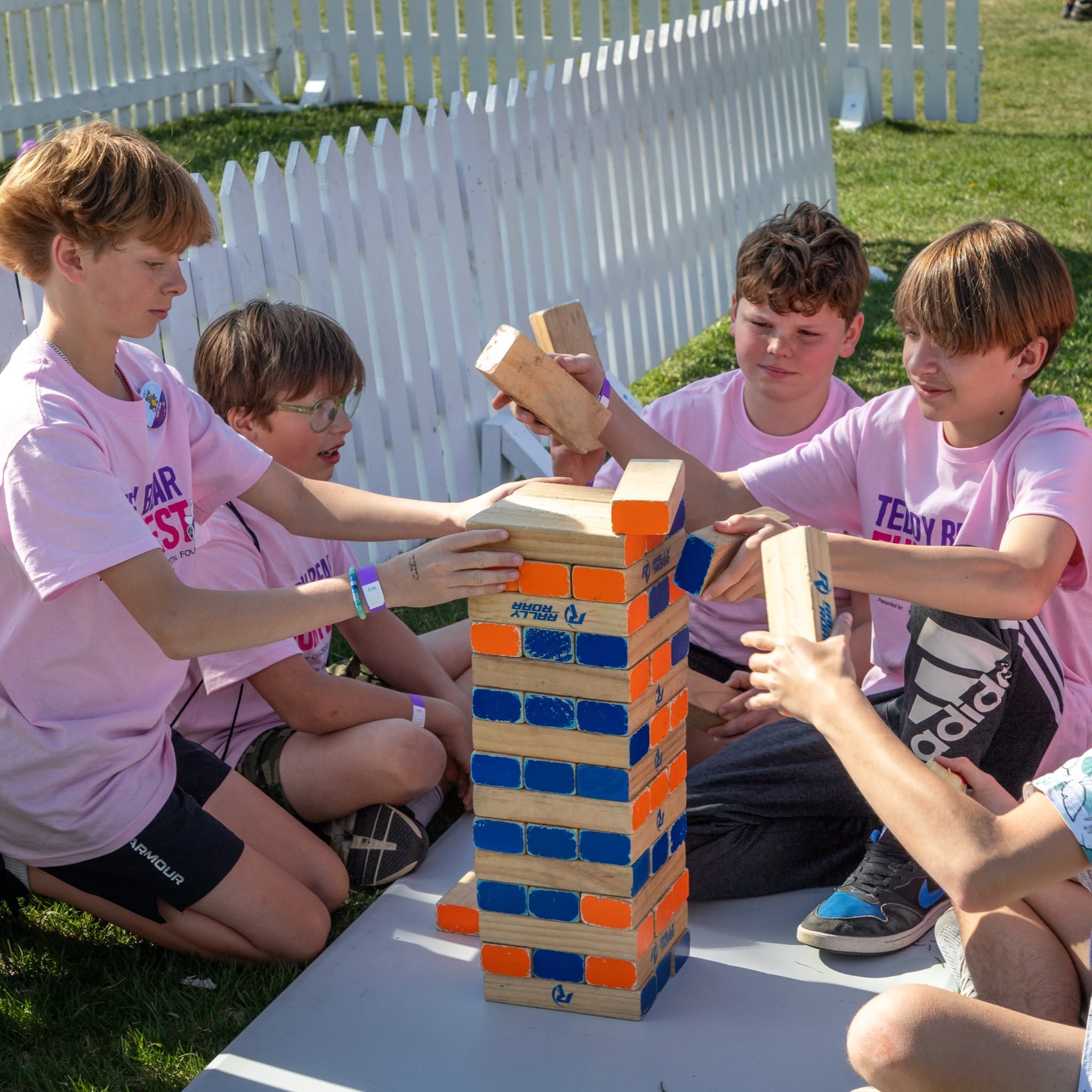
Every participant who raises $75 or more receives that year's limited-edition teddy bear—a different design each year, alternating between two namesake bears, Dan and Carol. In 2026, the team added a dedicated kids' incentive: any child raising $15 increments up to $150 unlocked extra prizes, recognizing that the people closest to Stollery's mission, the kids themselves, were also the easiest to motivate with a small, achievable ask.
In 2026, Teddy Bear Fun Fest welcomed +1.5k participants and raised 38% over their ambitious target.
The challenge: Hundreds of participants, almost no fundraising
Teddy Bear Fun Fest had grown steadily over its four years on Funraisin, but growth in registrations didn't automatically translate into growth in fundraising. Heading into 2026, Stollery's team faced a strategic tension: how do you grow revenue meaningfully when the bulk of your participants aren't fundraising at all, and the event itself is built to stay low-pressure and family-friendly?

The majority of participants weren't fundraising at all.
Looking back at 2025 data, the team estimated that of more than 1,300 participants, as many as 800, well over half, raised no money whatsoever. They'd registered, they might have shown up on the day, but the fundraising side of the platform was going untouched.

The same small group of families carried the storytelling load every year.
Stollery's marketing had relied on a pool of around 15 families with strong, well-known connections to the hospital. It was a reliable approach, but it meant the same voices were repeated year after year, while the hundreds of other participants—people with their own real reasons for showing up—went untapped as a storytelling resource.

Kids were participating, but weren't being asked to fundraise on their own terms.
Families fundraised as a unit rather than child by child, and the existing incentive structure wasn't designed with kids specifically in mind. For an event built around children's healthcare, the team saw an opportunity to bring kids into the fundraising experience directly, not just as participants.

A last-minute city meant a compressed, unpredictable runway.
Edmonton, by the team's own admission, tends to register late. In past years, a large share of sign-ups landed in the final week and a half before the event, leaving less time for those participants to fundraise at all.

"Donations come from across our community, in all shapes and sizes, and every single one matters. Each gift, no matter the size, helps support the work we fund within the hospital.

Nikola Tonn,
Event Specialist,
Stollery Children's Hospital Foundation
The solution: Designing for the people who weren't fundraising yet
Rather than optimizing further for Stollery's strongest fundraisers, the team built 2026's strategy specifically around the participants who historically raised nothing. That meant lowering the barrier to a first donation, creating a fundraising mechanic built for kids specifically, scaling email outreach dramatically, and replacing institutional storytelling with real participant voices.
A fundraising prize tier built just for kids
The team introduced a new incentive specifically for children, deliberately separate from the adult incentive structure. The ask was kept small and concrete: ask for $15. For families used to fundraising as a single household unit, it reframed the youngest participants as fundraisers in their own right. For every $15 that the 'cubs' raise, they earn an entry into a draw to win a Nintendo Switch.
Lowering the bar to a first donation
Alongside the kids' tier, the team revisited its broader incentive thresholds, looking for ways to give the historically non-fundraising majority an achievable target rather than a generic ask. The signature reward, a limited-edition teddy bear at $75 raised, remained the centerpiece, but the lower-tier asks gave participants more reasons to start fundraising, rather than skip it entirely.
Sharing more stories from the community
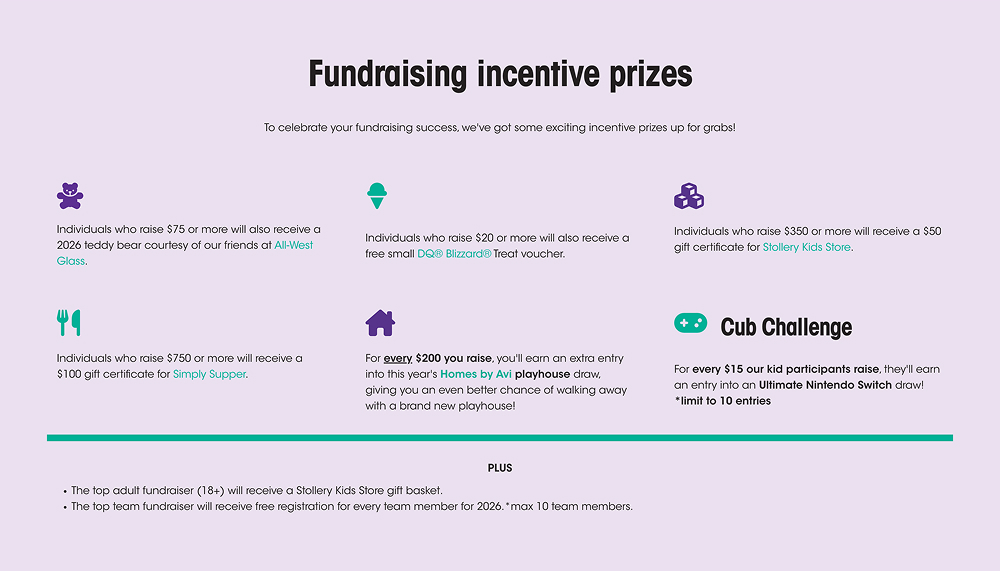
Instead of drawing exclusively from Stollery's established pool of family ambassadors, the team built 2026's storytelling around a larger pool of people actually registering and fundraising, including a staff member who joined the event for the first time and personally raised over $1,000 simply by asking. They mixed smaller, everyday stories with larger, life-changing stories to cover the broad base of reasons why people join.
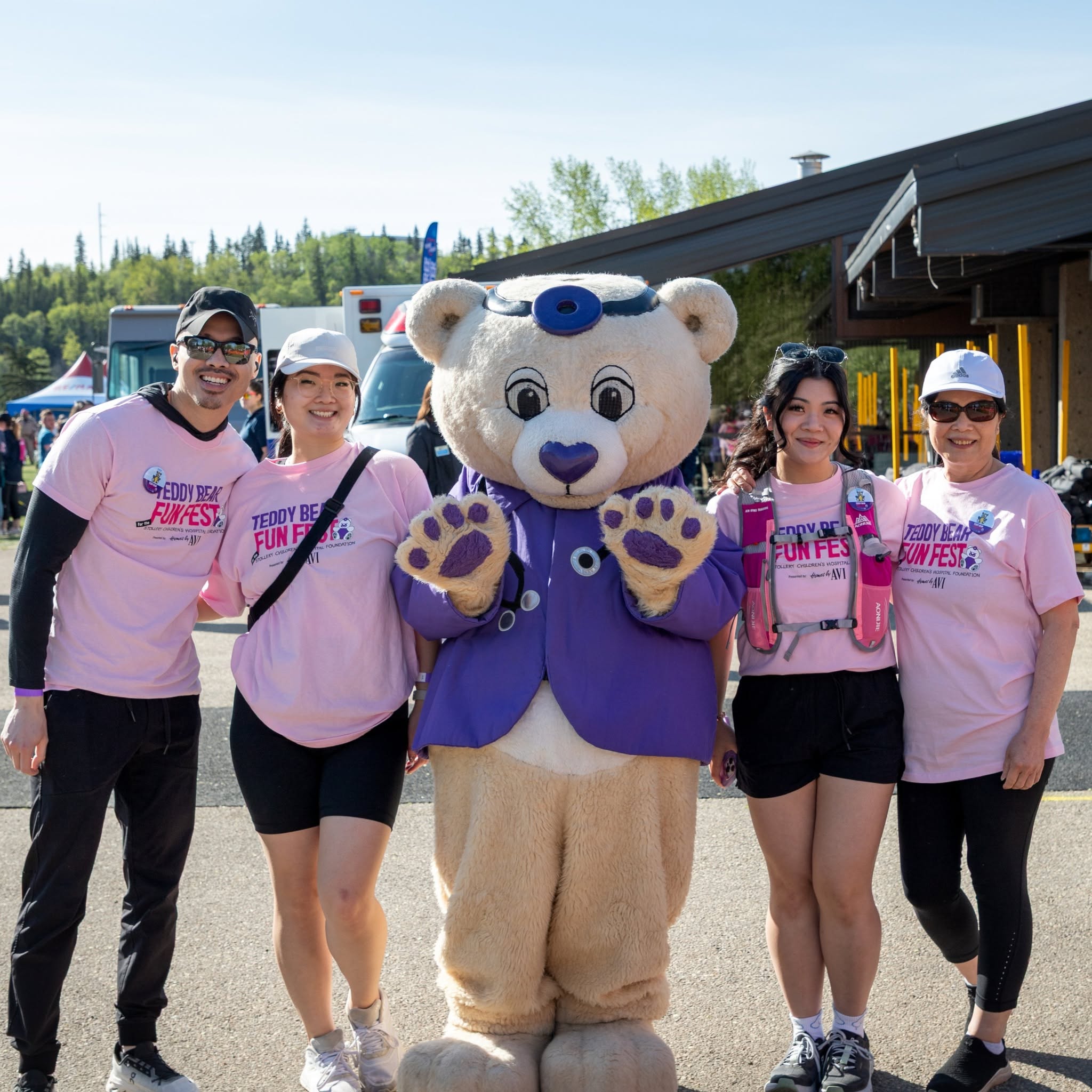
"We pulled from the people who were actually participating and let them tell their stories of why. Because anytime you talk to someone about a children's hospital, they know someone who either works there, or someone whose kid has been there."
Nikola Tonn,
Event Specialist,
Stollery Children's Hospital Foundation
Matched giving stacked on top of organic growth
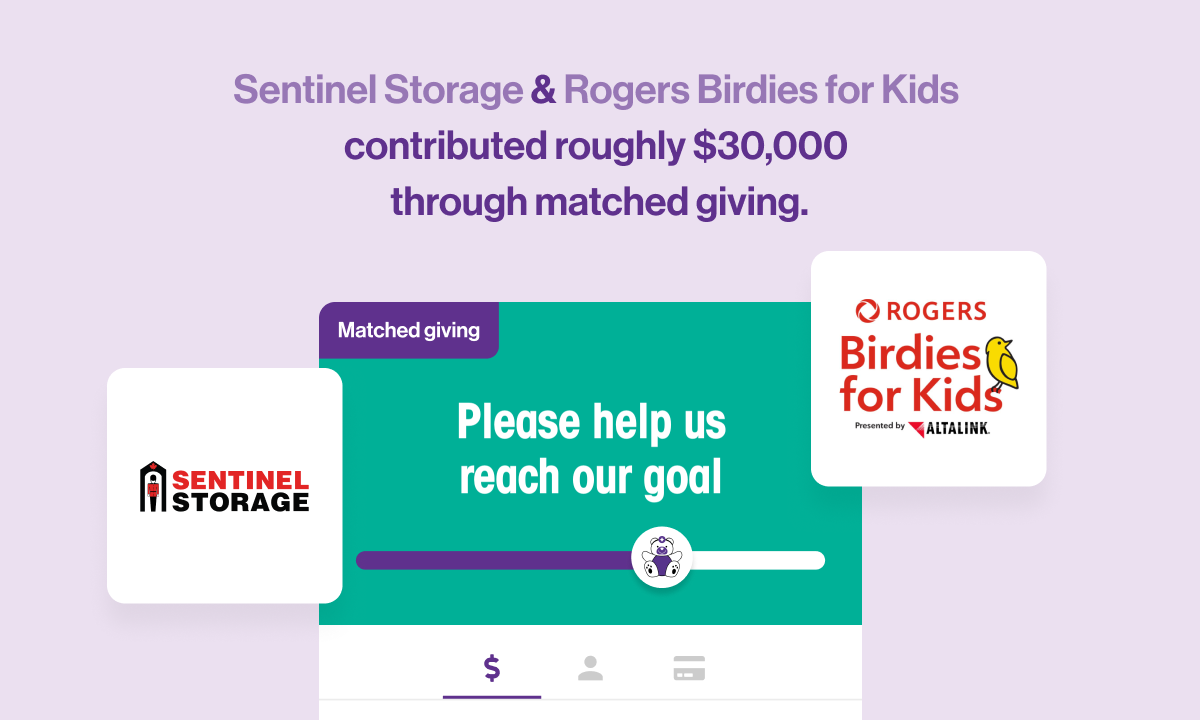
Title sponsors Sentinel Storage and Rogers Birdies for Kids both contributed matched giving this year, adding roughly $30,000 to the final total between them. But even with that matching removed from the calculation, the team's own analysis showed participant fundraising alone was still comfortably ahead of any previous year, the lift wasn't just sponsorship dollars sitting on top of a flat result.

$330k
raised
$90k over the $240k target

930
early sign-ups
by Apr 24, up from 692 a year earlier

Sold out
teddy bear order
for the first time ever
The results: More fundraisers than ever before
Against an original goal of $240,000, Teddy Bear Fun Fest 2026 delivered an estimated gross revenue of $330,000—more than $90,000 over target, not including the roughly $30,000 contributed through matched giving from Sentinel Storage and Rogers Birdies for Kids.
Registrations climbed to 1,502, up from 1,380 in 2025 and 871 in 2024. And the shift toward earlier registration was just as striking: by April 24, 2026, 930 people had already signed up, compared with 692 on the same date the year before.
Forty teams individually raised more than $1,000 each. A first-year corporate team raised $12,000. And for the first time in the event's history, the Foundation's order of incentive teddy bears sold out completely, prompting an unplanned reorder.
What you can apply: Six ideas for your own event

Look at your own non-fundraiser percentage before you plan next year.
If a large share of participants raised nothing last year, that could be your biggest single growth opportunity.

Build at least one incentive tier specifically for the people who haven't started.
A $10 first ask feels much more approachable, and if people get rewarded for their first $15, they'll be more likely to hit $75, $150, $500+ targets.

If your event serves kids or families, give kids their own fundraising moment.
A prize tier designed just for children reframes them as fundraisers, not bystanders.

Rotate your storytelling beyond your go-to ambassadors.
The participants who are actually registering this year often have the most relevant, current stories to tell.

Scale your outreach deliberately and measure it.
Stollery's email volume grew nearly ninefold year-on-year, and they tracked landing page views to confirm it was driving real traffic, not just noise.

Watch your early registration numbers as a leading indicator.
Participants who sign up earlier have more time to fundraise.
"I think everyone's team stories were really heartfelt this year. Sharing stories make a big impact.
Nikola Tonn,
Event Specialist,
Stollery Children's Hospital Foundation
Want this kind of growth for your event?
Funraisin helps fundraising teams turn every participant into a fundraiser—not just the ones who already know how.

