


In March 2025, Thames Valley Air Ambulance ran the fourth year of Mission 40, their virtual challenge to walk, run, cycle, swim, or wheel 40 miles in a month, matching the average distance their helicopter flies to reach an emergency. It was their second year on Funraisin, and the year the team stopped tweaking and started iterating.
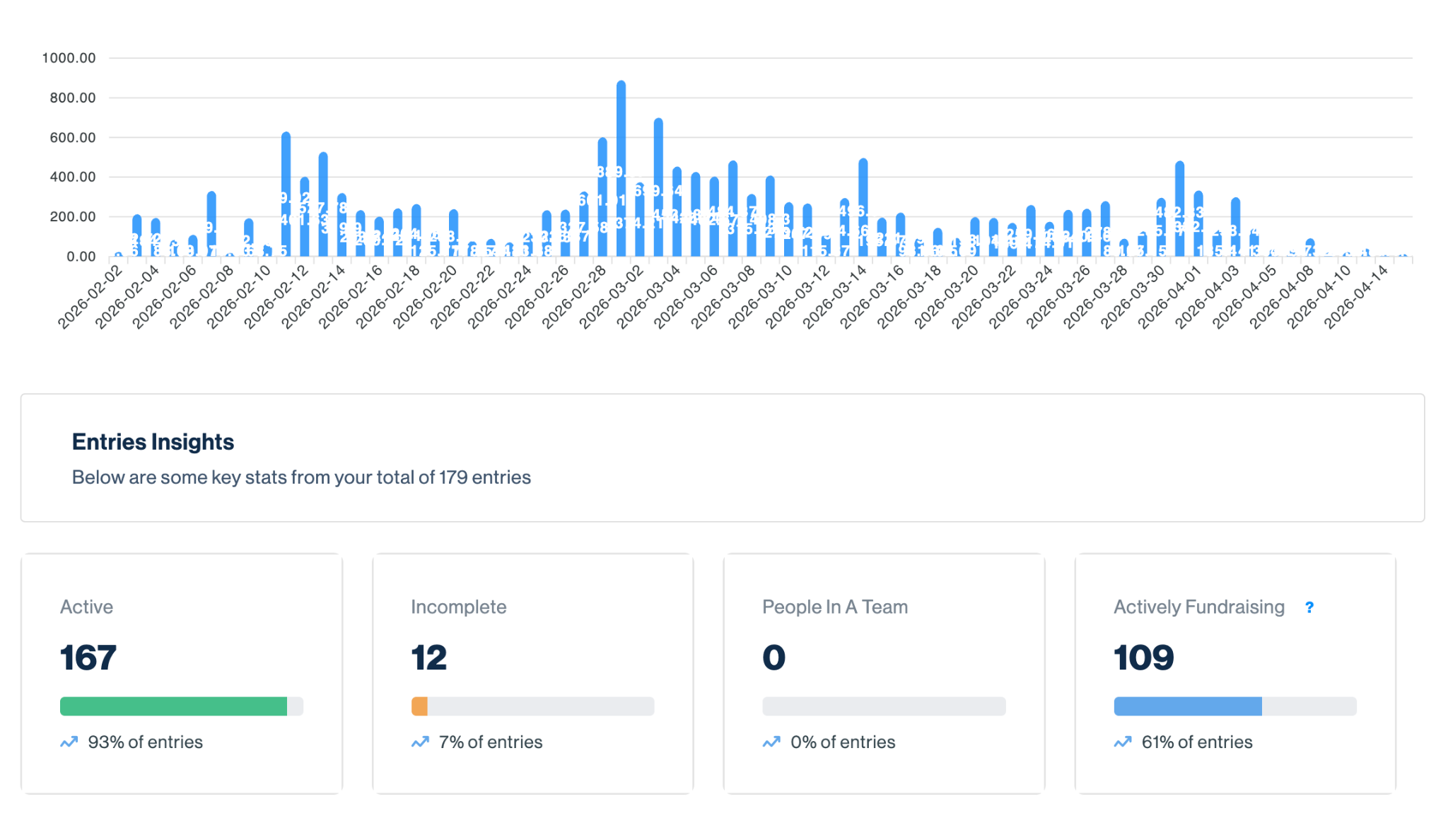
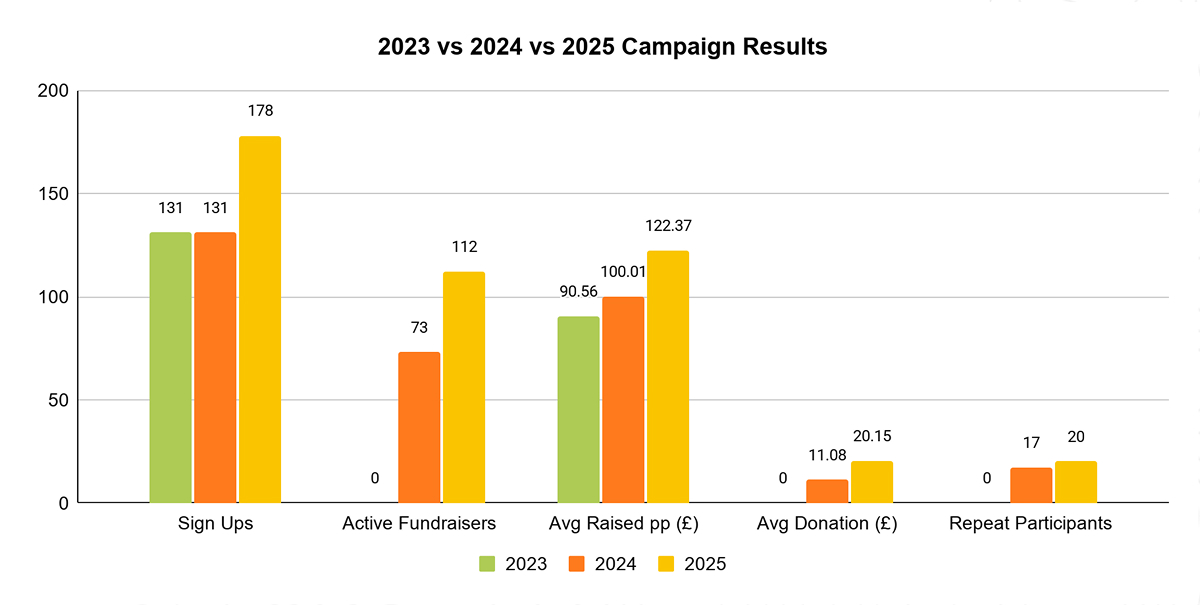
The result was the biggest Mission 40 in the campaign's history. Income was up 66% year-on-year, the average donation value rose 81%, 178 fundraisers signed up (a record), and fundraiser activation lifted by 2 percentage points. Mission 40 didn't just beat 2024. It beat the COVID-era peak that the team had been chasing for three years.
What changed wasn't the challenge itself. The miles, the t-shirt, the March window were all the same. What changed was how the team used the platform—and the data it gave them—to redesign the supporter experience around the people actually taking part.
We sat down with Kim Williamson (Events Manager at Thames Valley Air Ambulance) to talk through what shifted between year three and year four, why it worked, and what they're carrying into future iterations. Keep reading to find out how they did it.
About the campaign
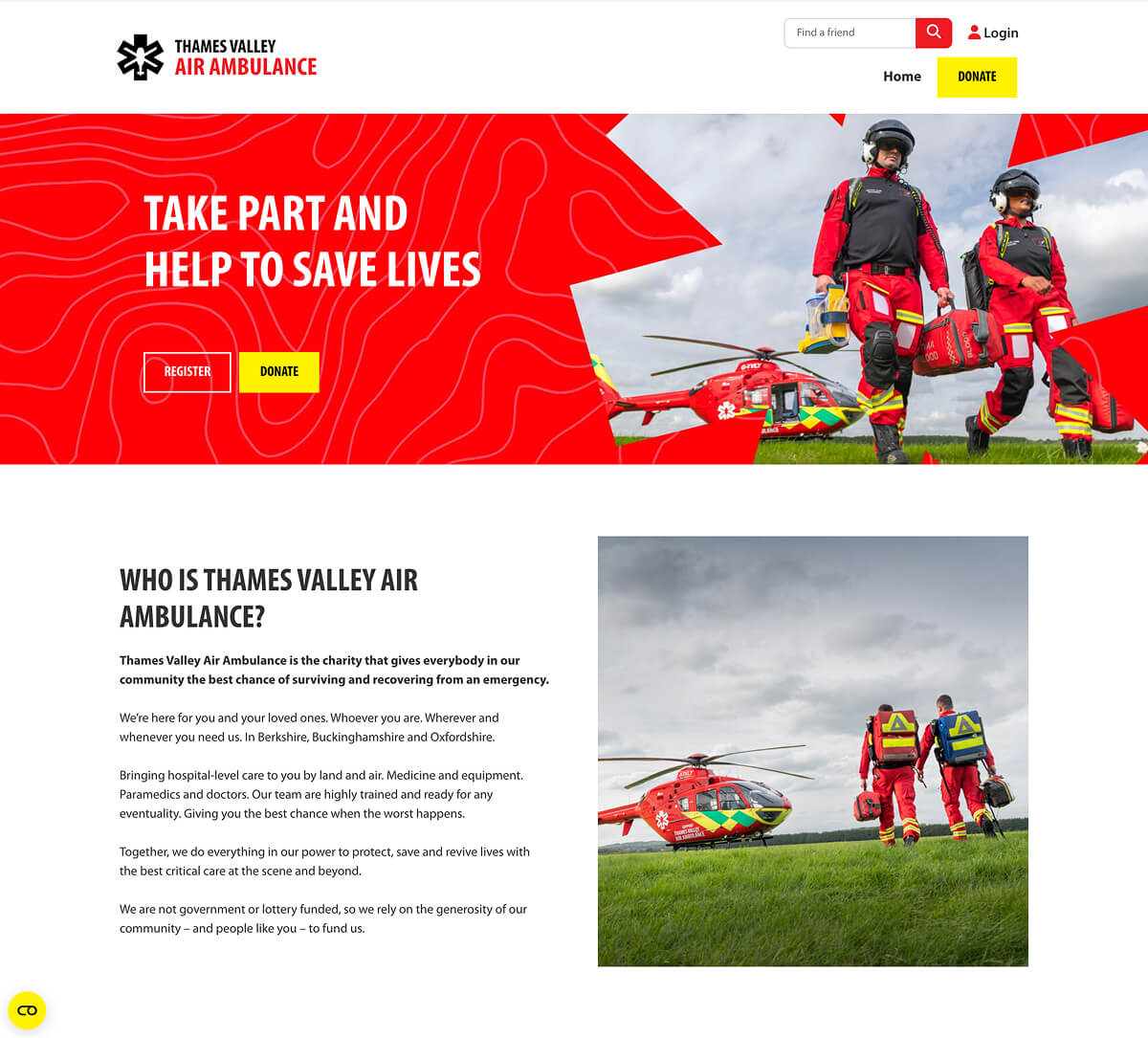
Thames Valley Air Ambulance is the independent charity providing emergency medical care by air and land to patients across Berkshire, Buckinghamshire, and Oxfordshire. The service receives no regular government or NHS, relying entirely on community support to keep its crews ready to respond.
Mission 40 is the charity's flagship virtual challenge. Complete 40 miles in March, by walking, running, swimming, cycling, or wheeling.
40 miles is the average distance the Thames Valley Air Ambulance helicopter flies to reach an emergency in the region, so every mile a participant covers connects directly to the cause they're supporting.
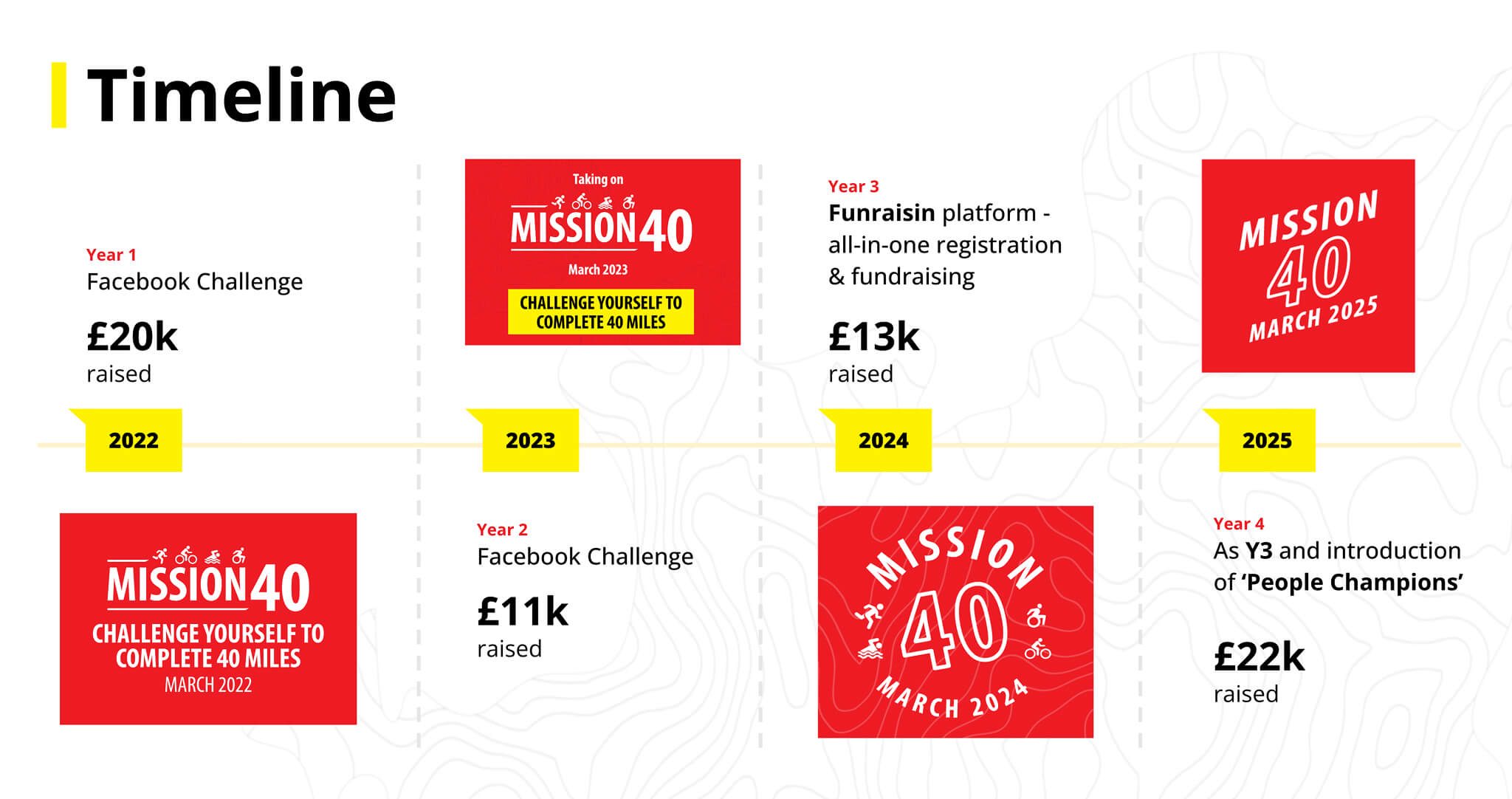
The campaign launched in 2022 immediately post-pandemic, when most charities were experimenting with virtual challenges as a way to keep supporters engaged in a safer format. The first year raised around £20,000. Mission 40 has run every year since, with a participant base built largely from a cold Facebook audience and a thriving community group.
In 2025, the fourth year of the campaign, 178 people signed up, raised over £21,000, and helped fund critical care for some of the region's most seriously ill and injured patients.
The challenge: A four-year-old virtual challenge that had quietly stopped growing
By the end of year two, Kim and the events team at Thames Valley Air Ambulance were facing a question that a lot of UK charities were sitting with at the same time. Their virtual challenge had launched strongly during COVID, dipped sharply the year after, and was starting to feel like it might be losing its place. The fundamentals weren't broken, but the trajectory wasn't where it needed to be either.

Income was sliding, not stable.
After raising £20,000 in its first year, Mission 40 dropped to £11,000 in year two. That's the kind of drop that forces a hard conversation about whether to keep going, retire the campaign, or change something fundamental about how it runs.

The supporter journey was stitched across three places.
Participants saw an ad on Facebook, clicked through a lead form, funnelled into a Facebook group for engagement, then handed over to a third-party platform to formally register set up a fundraising page.Three platforms, three handovers, three points where supporters could drop off. The team was spending more time chasing people through the funnel than building the community inside it.

The product was the same every year, except for the t-shirt.
Mission 40 had become operationally stable but creatively static. The miles, the mechanic, the comms, and the structure were near-identical year on year. The only thing that changed was the t-shirt design. Without iteration, even a strong product starts to fade.

The team had limited visibility into what was actually working.
Reporting was manual. Activation rate wasn't trackable in any meaningful way. Average donation data was hard to surface. Without a feedback loop, the team had no clean way to identify which levers to pull next, or whether the changes they did make were having the effect they thought.

“We were in a place where we were thinking—coming out of COVID, are virtual challenges where we want to keep going? Is this really the success we're seeing, or is it drying up?”

Kim Williamson,
Events Manager,
Thames Valley Air Ambulance
The solution: A data-driven reiteration
The strategic shift came in two stages. In 2024, Mission 40 moved onto Funraisin. That fixed the supporter journey and gave the team visibility into the data for the first time. In 2025, with a year of evaluation behind them, they stopped using the platform to host the same campaign and started using it to redesign the campaign itself, specifically around the people taking part.
One challenge, three distances
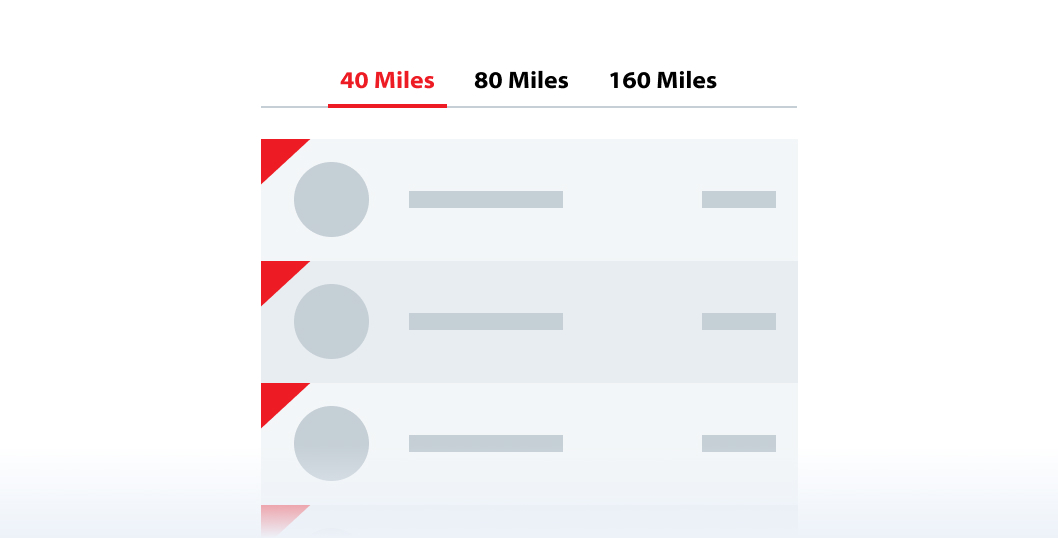
The 40-mile target was working for one segment of the audience—people getting back into exercise or new to fundraising. But year-one data showed a second segment of cyclists clearing 40 miles in an afternoon and pushing on to 120 or 150 miles unprompted. Rather than launch a separate event, the team added two new distances inside Mission 40: 80 miles and 160 miles. The 40-mile option stayed put. The 80 and 160 spoke to cyclists, ultra runners, and participants who wanted a stretch. Same campaign, three challenges inside it.
Three real captains, not one mascot
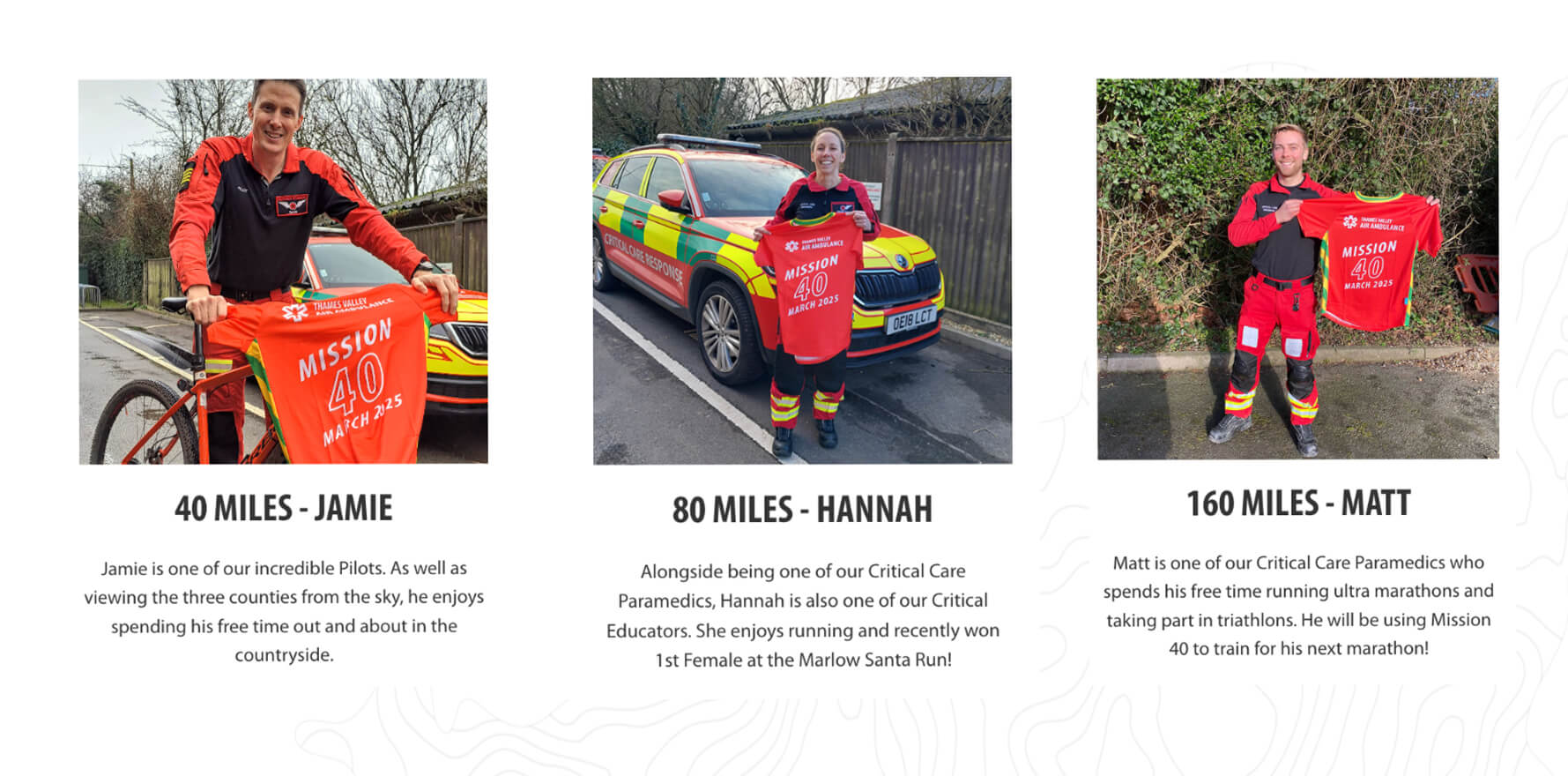
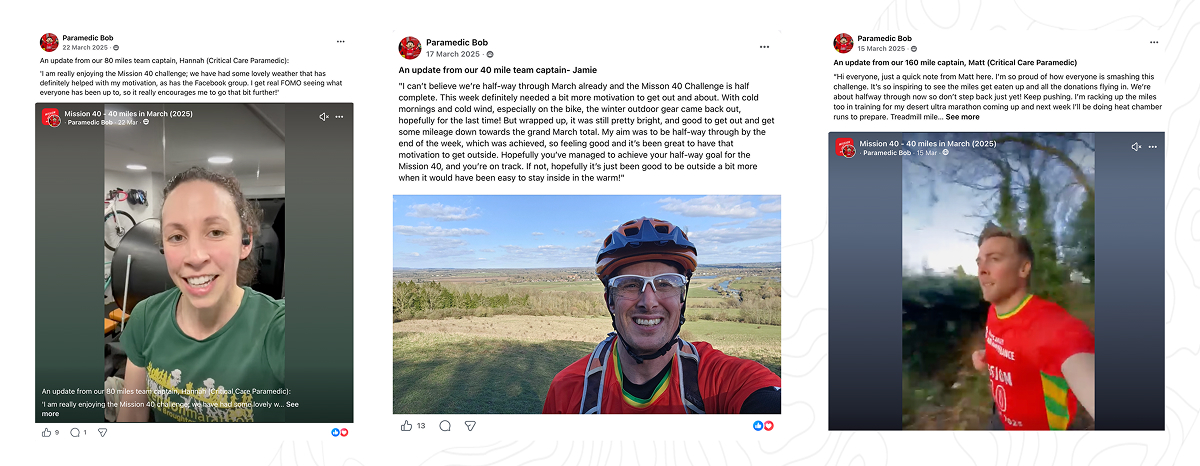
Paramedic Bob, the campaign's mascot, had been the voice of the Facebook group for years. In 2025, the team brought in three real members of the Thames Valley Air Ambulance crew as team captains, one per distance. Hannah, a critical care paramedic, fronted the 40-mile route. Jamie, one of the pilots and an avid cyclist, took 80. Matt, also a critical care paramedic and an ultra runner, took 160. All three signed up and took part themselves, contributing in the Facebook group throughout March with their own training, photos, and updates from the road.
A leaderboard per distance
Mileage and fundraising leaderboards were set up per distance, not for the campaign as a whole. A first-time 40-miler no longer logged onto the same board as someone clocking 200 miles on a road bike. Each group competed against people on the same kind of journey, which kept the community-feel honest and the engagement higher.
Donation handles up, with the impact spelled out
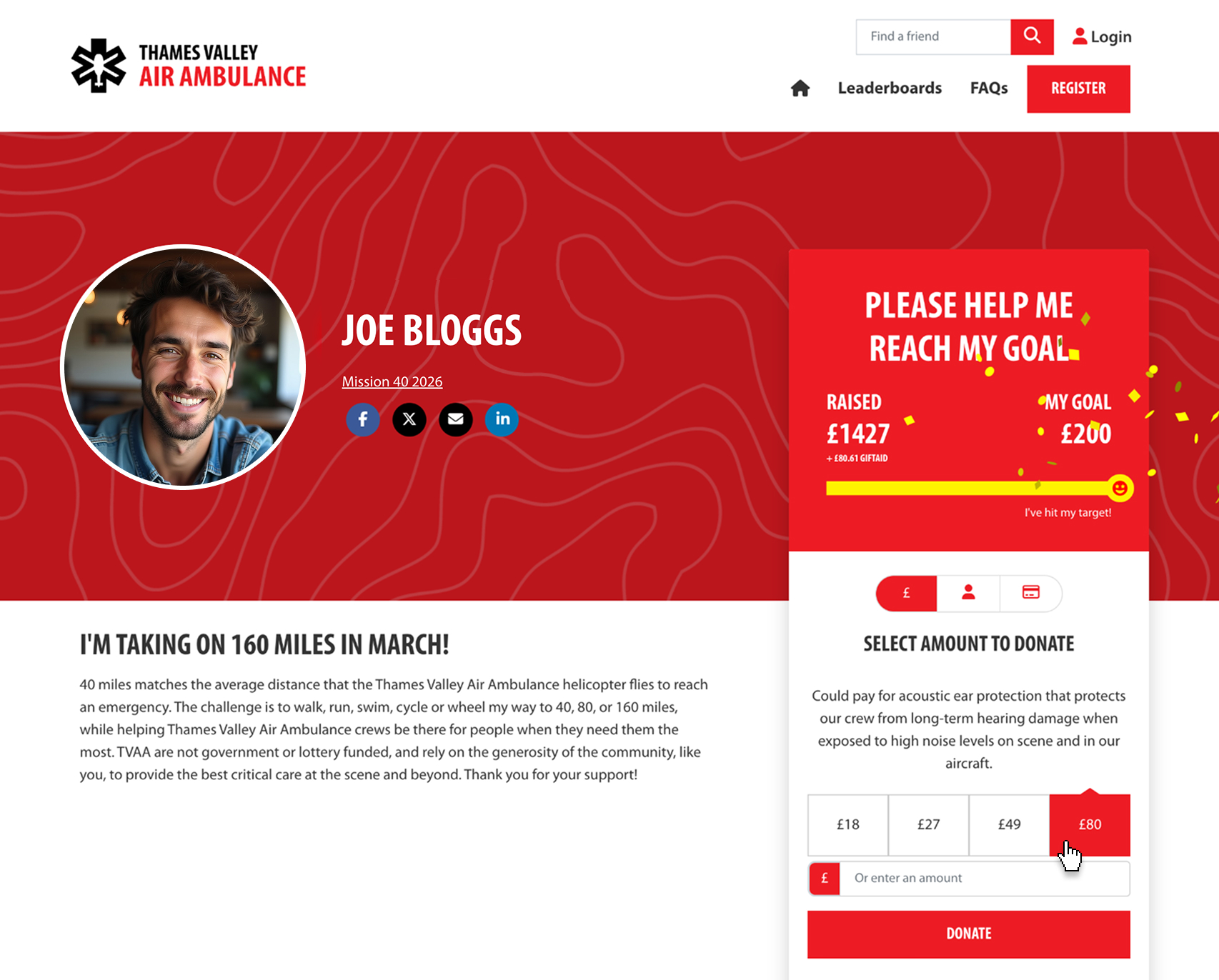
Post-2024 evaluation surfaced something the team had suspected: donation handles had been set too low in the early years and never updated. Mission 40 had been quietly undercutting itself on every donation page. For 2025, the handles went up, and each one was paired with an impact statement, framed against the charity's shopping list of what each amount actually pays for. The result was an 81% lift in the average donation across the campaign.
Self-donation at registration
Every fundraiser is now prompted to make a self-donation when they set up their page. Uptake was higher than the team expected, and the effect compounds: a fundraiser who has already given is more committed and more likely to raise more, and the page starts with a number on the board rather than zero.
“From evaluating 2024, we realised our dollar handles amount were much lower than the most common ‘enter you own donation amount’. Also by adding our ‘shopping list’ items to the donation made it a lot more impactful to donors.”
Kim Williamson,
Events Manager,
Thames Valley Air Ambulance
Three segmented sign-up flows, one consistent experience
Behind the scenes, sign-ups for the three distances ran through three separate registration flows. Supporters saw a single, consistent journey. The team got clean data on who picked which distance, which fed the per-distance leaderboards, the segmented comms from the captains, and the post-event evaluation.
The experience: A community taking on the challenge alongside the crew
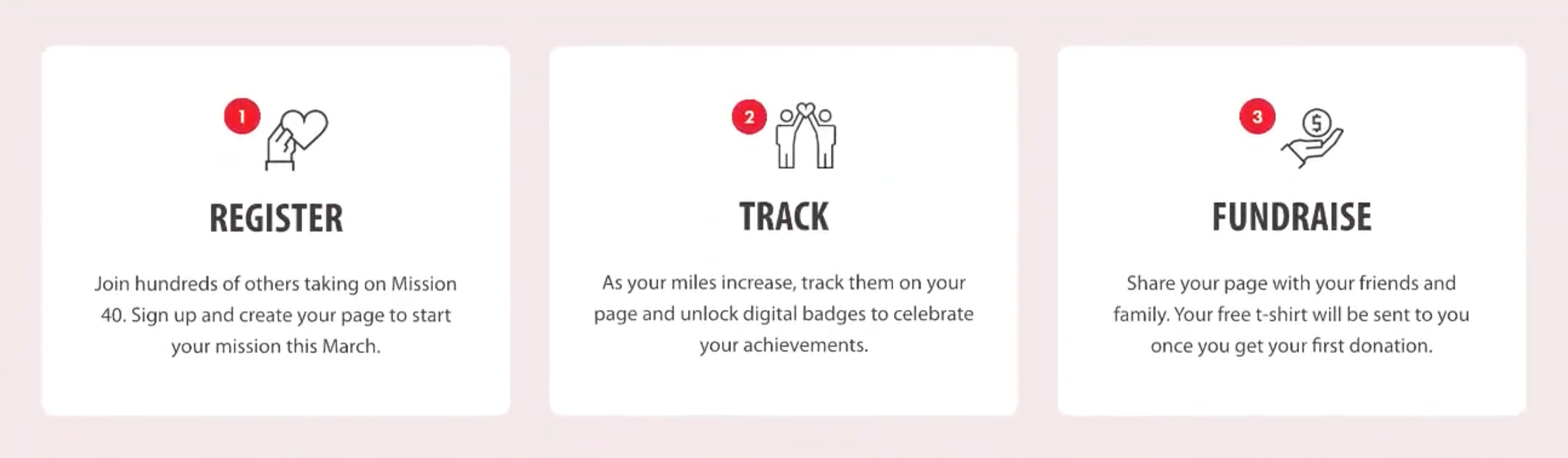
From the supporter's perspective, Mission 40 2025 felt less like signing up for a charity event and more like joining a group. Captains posted in the Facebook group throughout the month, sharing training photos, route updates, and short films from their own miles. Participants replied. Conversations started. The leaderboards gave the community something to follow and something to share. The mileage gamification badges gave them something to chase.
Even with most of the audience acquired cold from Facebook, a meaningful number of participants had been personally impacted by the charity in some way. The captains gave them someone to talk to who had been on the other end of a mission. That's the kind of conversation a virtual challenge rarely creates. Mission 40 created it on purpose.
“It felt like Thames Valley Air Ambulance were taking on the challenge alongside everyone else. That helped build a camaraderie in the community group that people really liked.”
Kim Williamson,
Events Manager,
Thames Valley Air Ambulance
The results: The biggest Mission 40 in the campaign's four-year history
2025 delivered the strongest year of Mission 40 to date, beating both 2024 and the COVID-era peak the team had been working to recover. Every key metric moved in the right direction.
- Up 66% in income year-on-year, with over £21,000 raised across the campaign.
- Up 81% in the average donation made to Mission 40, driven by higher dollar handles, impact statements, and the self-donation prompt during registration.
- 178 fundraisers signed up, the highest sign-up volume in the campaign's history.
- 2 percentage point increase in activation rate, only trackable because the campaign was on Funraisin.
- Up year-on-year in the average raised per fundraiser, a quieter metric with a real compounding effect at scale.
- Beating the COVID-era peak that the team had been working back towards for three years.
“We’re really proud of the change around in this campaign. Being able to raise the most the campaign has ever done, even from peak virtual challenge times, is a huge achievement for us. And that’s really down to putting our people at the front of the challenge and working with Funraisin to make those small tweaks to elevate those other features, so they trickle down to the bottom line.”
Kim Williamson,
Events Manager,
Thames Valley Air Ambulance
The takeaway: Virtual challenges are still relevant, they just need the right campaign architecture
Most virtual challenges launched during COVID hit their peak in year one and have been quietly fading since. The instinct, when one of yours starts to drift, is to retire it or relaunch it. The better question is what you've stopped iterating on.
Mission 40's biggest year wasn't its launch. It was its fourth. The platform move stopped the slide, and the iteration is what made it a record.
What you can apply: Five moves to lift a tired virtual challenge

Don't redesign the challenge.
Try updating the segments inside it. If a chunk of your participants are clearing the target too easily, they're a different audience to your entry-level segment. Add a stretch distance rather than launching a new event. Create leaderboards that people love to compete in.

Put a face to the campaign.
Include real members of your team or your beneficiary community. A face people can talk to outperforms a mascot every time, especially for cold-acquired audiences.

Leaderboard per segment, not for the whole campaign.
It keeps the competition honest and the community feeling fair, particularly when participants have very different ability levels.

Re-audit donation handles every year.
COVID-era donation handles are almost certainly too low, but test them and see what works. Pair higher amounts with concrete impact statements so the ask lands as a choice and investment in real impact, not a request.

Prompt self-donation at registration.
The fundraisers who give first are the fundraisers who stay engaged and raise more on average. Build it into the flow, not an afterthought.
“We’ve seen great success moving the campaign onto Funraisin and have started to move more of our events over so we can continue similar uplifts across our portfolio.”
Kim Williamson,
Events Manager,
Thames Valley Air Ambulance
Ready for your year-two lift?
If your virtual challenge has gone quiet, the question isn't whether to retire it. It's what you've stopped iterating on. We'd love to show you what year two on Funraisin could look like for your campaign.

