Victoria Read
Customer Success Manager (UK/EU) Funraisin
Hi, I’m Victoria, Senior Customer Success Manager for our UK/EU charities at Funraisin.
That means I get a front-row seat to all the clever things charities do to engage supporters and make it easier to give.
One thing I see time and time again? The best-performing donation forms aren’t just well-built—they’re designed with empathy.
They feel personal, relevant, and reassuring because the people behind them have taken the time to step into their donor’s shoes.
Here are three tips you can steal right now to create donation forms your donors will actually love.
Start with a real person in mind
One of the most effective ways to step outside our own perspective is through personas—fictional yet research-informed profiles that represent different types of supporters.
Personas help us design with empathy, by shifting our focus from what we would do to what they might need, want, or feel.
We tested the power of personas at Summerosity—a fundraising event in London run by creative fundraising agency Aha—where we ran an experiment called the Donor Lab.
The Donor Lab got a room full of fundraisers to test three different donation flows to see which would raise the most—but there was a twist. For the final donation experience, we asked people to donate as a persona called ‘Eric’.
We gave them a very basic profile of Eric, to help them step into his shoes:
- 52 years old
- Urban professional
- Medium disposable income
- He has a friend impacted by the cause
- First engaged when sponsoring someone in an event
When the fundraisers gave as 'Eric', their giving behavior was different than when they gave as themselves. They chose different amounts, reacted differently to impact statements, and approached the journey from a whole new perspective.
That’s the power of empathy in design—it interrupts our unconscious bias. In fundraising, bias often looks like designing for what we would do or what we think a donor will do. Personas help us see beyond that and design for different mindsets, motivations, and levels of commitment.

How to put it into practice:
- Build different personas that reflect a variety of your donor motivations—not just demographics.
- Put yourself in their shoes and navigate your website, donation forms, event sign-ups, or blogs as that persona.
- Notice what stands out, what motivates you, and where you encounter friction or confusion.
- Repeat the process with multiple personas to surface different perspectives, and invite your team members to do the same.
Want to dig deeper into the Donor Lab results?
Read the full breakdown here—including why one flow inspired significantly higher giving.
Use impact statements that connect to their motivation
Fundraising psychology (and plenty of real-world testing) shows that people give more generously when they can see what their money will do.
But the impact you show needs to match why they’re giving—this is known as ‘value framing’.
Take our persona, Eric, for example. His motivation was rooted in supporting a friend. affected by the cause.
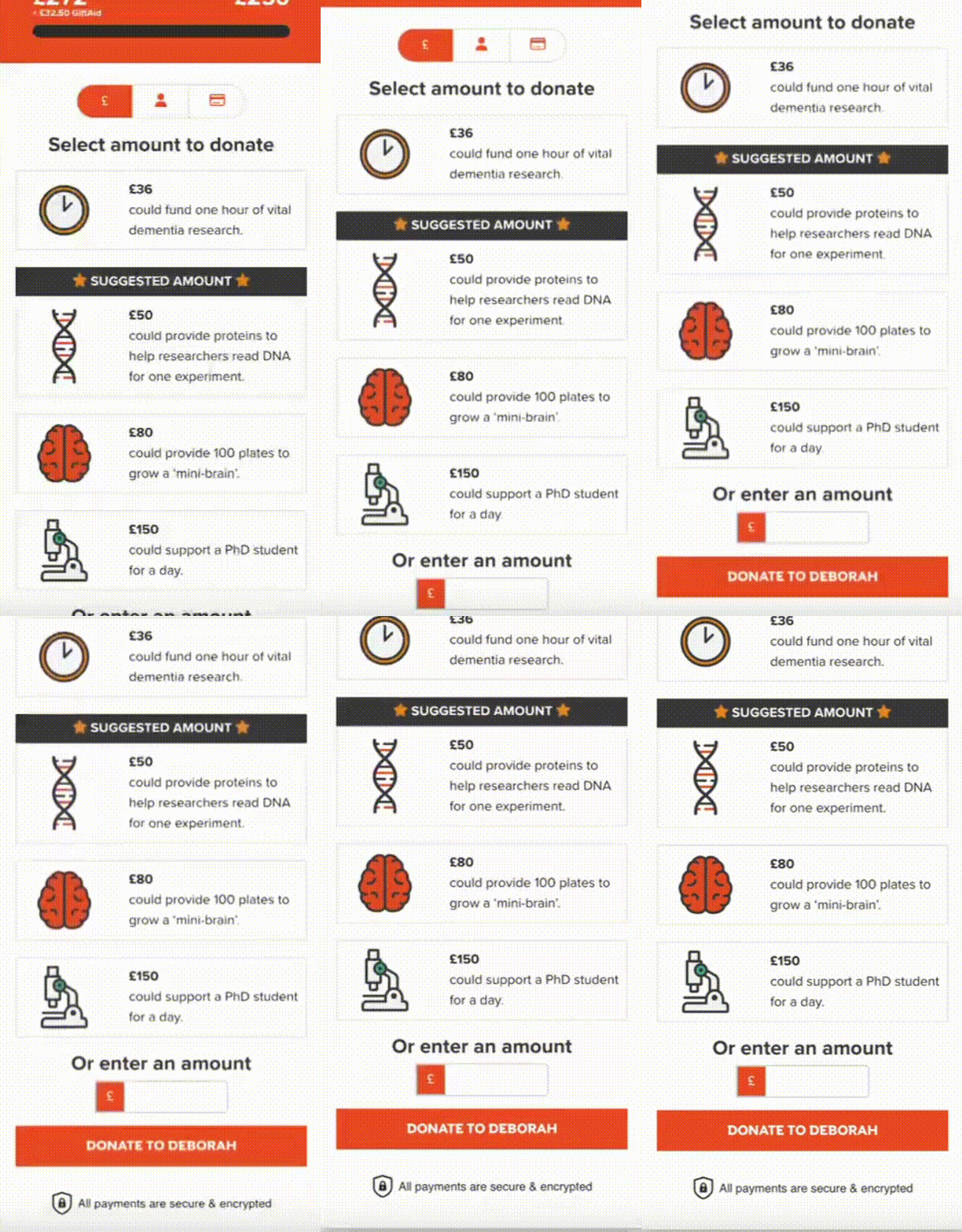
Our testers agreed that the impact statements that landed best were the ones that made that connection crystal clear—“your gift provides care for people like your friend.”
When impact feels relevant, it does two important things:
- Boosts emotional connection: It shifts giving from a transaction to a personal act of meaning.
- Anchors the value of the gift: If £66 covers a full day of care, donors can visualize that and feel good about aiming for it—even if they might have intended to give £50
How to put it into practice:
- Map out common donor motivations for your campaign, then craft specific impact statements for each.
- Test different ‘value framing’ phrases—sometimes a higher suggested value works better if paired with a powerful impact statement.
- Use Funraisin's personalization tools to serve the most relevant impact statement to each segment or audience.
Make the journey feel easy and reassuring
Even the most motivated donor can drop off if the giving process feels complicated, unclear, or untrustworthy. Our testers knew Eric was a busy professional, he’d have a couple of minutes at most. Our aim is to reduce friction and increase cognitive ease.
For Eric, a smooth, reassuring journey meant:
- Clarity at every step: He knew exactly what was being asked, why it mattered, and what would happen next.
- No unnecessary hurdles: Short forms, clear payment options, no distractions.
- Reassurance that his gift counted: Confirmation messages, impact reminders, and a thank-you that felt personal.
How to put it into practice:
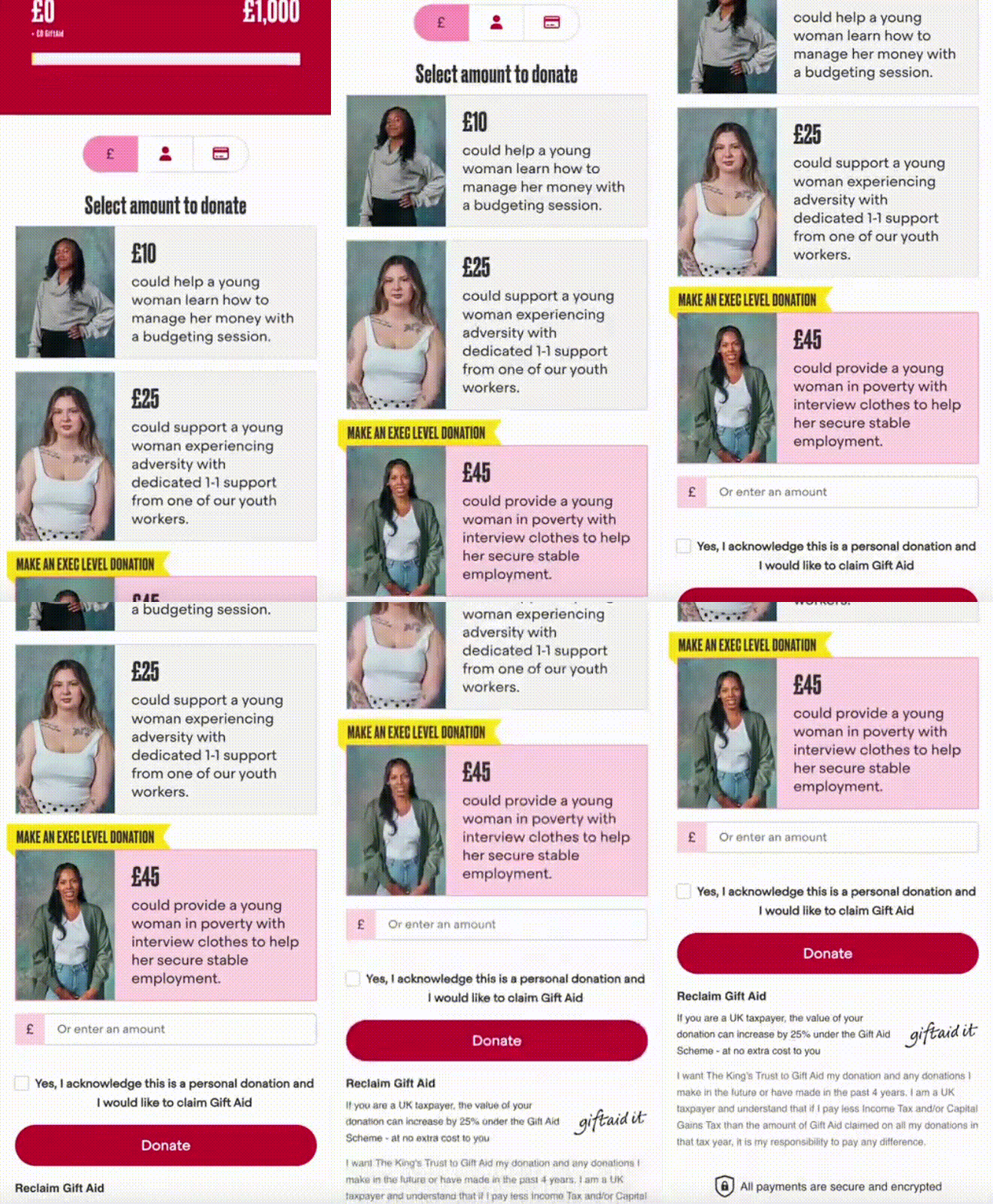
- Keep forms short—only ask for what you truly need at that moment.
- Remove visual clutter and make calls-to-action obvious.
- Use trust signals: secure payment icons, testimonials, impact proof points.
So… where to start?
Don’t worry, this isn’t a plea for you to build a dozen donation pages!
I know you’re short on time and gearing up for the next big campaign. You can still design epic donation flows without doubling your workload.
Here are a few things you can do today:
Build richer personas
Create an array of personas like Eric who represent your supporters, then navigate your pages and flows as that person.

Offer variety
Try different CTAs or donation prompts for different audiences, take note of what works.

Talk to real donors
Ask why they gave and what they noticed, before you design your next campaign.
Want more about donation flows?
If you want to see exactly how we tested different donation flows—what worked, why it worked, and the ideas you can steal for your own forms—check out our Donor Lab recap from Summerosity.
New to Funraisin?
If you’d like to explore how Funraisin can help you design donation forms that work harder and feel more personal, schedule a demo with our team.