They hit $1.6 million and had to raise their own target mid-way through, beating last year’s record by 52%.
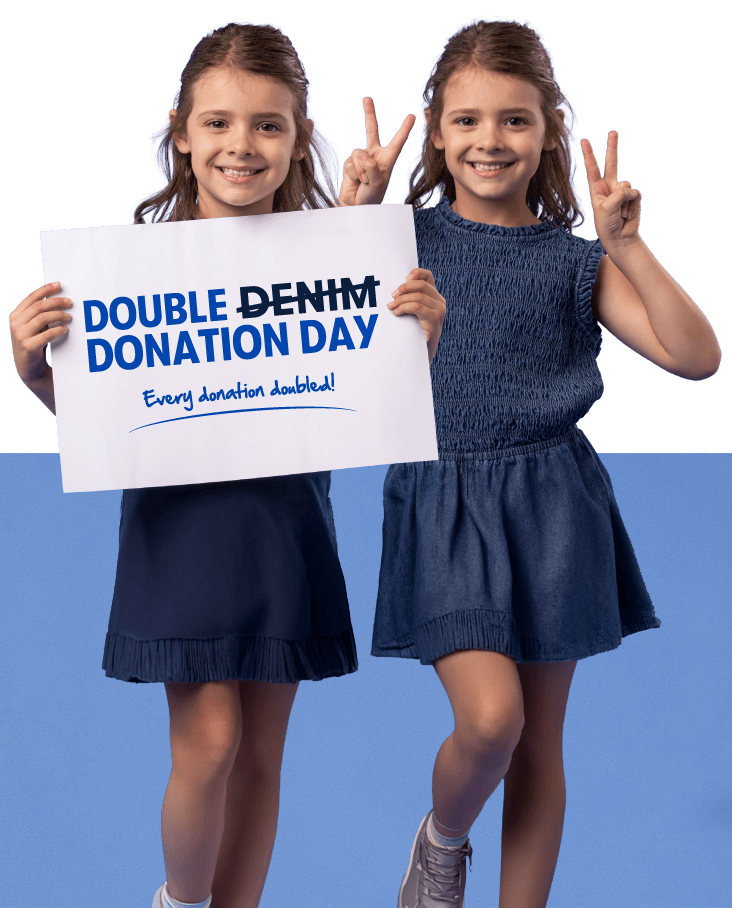
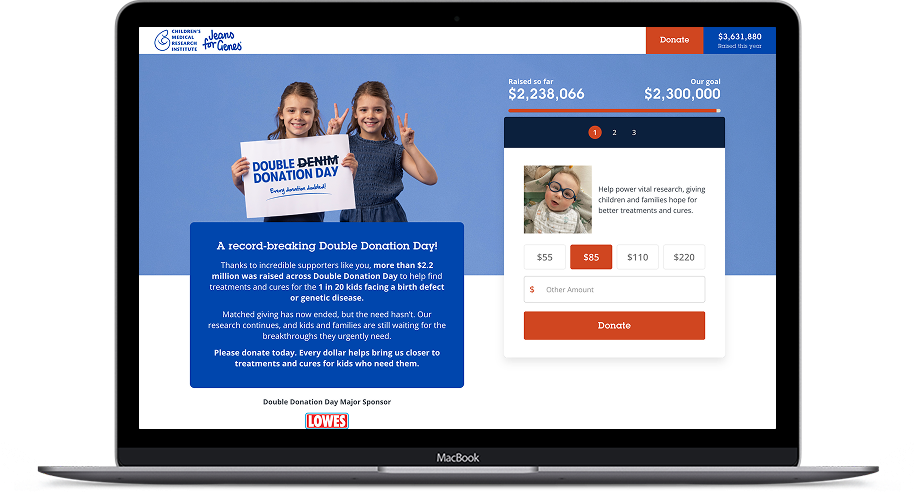
Double Donation Day is the biggest moment on the calendar for Jeans for Genes, the Children's Medical Research Institute's national campaign, matching donations dollar-for-dollar while matched funds remain to fund research into treatments and cures for the the 1 in 20 kids who face a birth defect or genetic disease, including cancer and cystic fibrosis.
They run five fundraising events at once every August. For two days during the campaign, Double Donation Day applies to all of them, doubling every gift while matched funds remain, while also standing as its own dedicated appeal.
At 8am on the first Thursday of August, the Jeans for Genes team switched on the matched giving page and started watching a number climb. By 2:30pm, it had already broken a record they didn’t expect to hit until day two. After adding more to the match pot, they hit $2.24M+ total in two days, beating their previously set record by 52%.
We sat down with Greg Noel-Butterworth, the Jeans for Genes Campaign Manager, to find out how they did it.
A donation page that splits in two, and why every button leads back to the same place
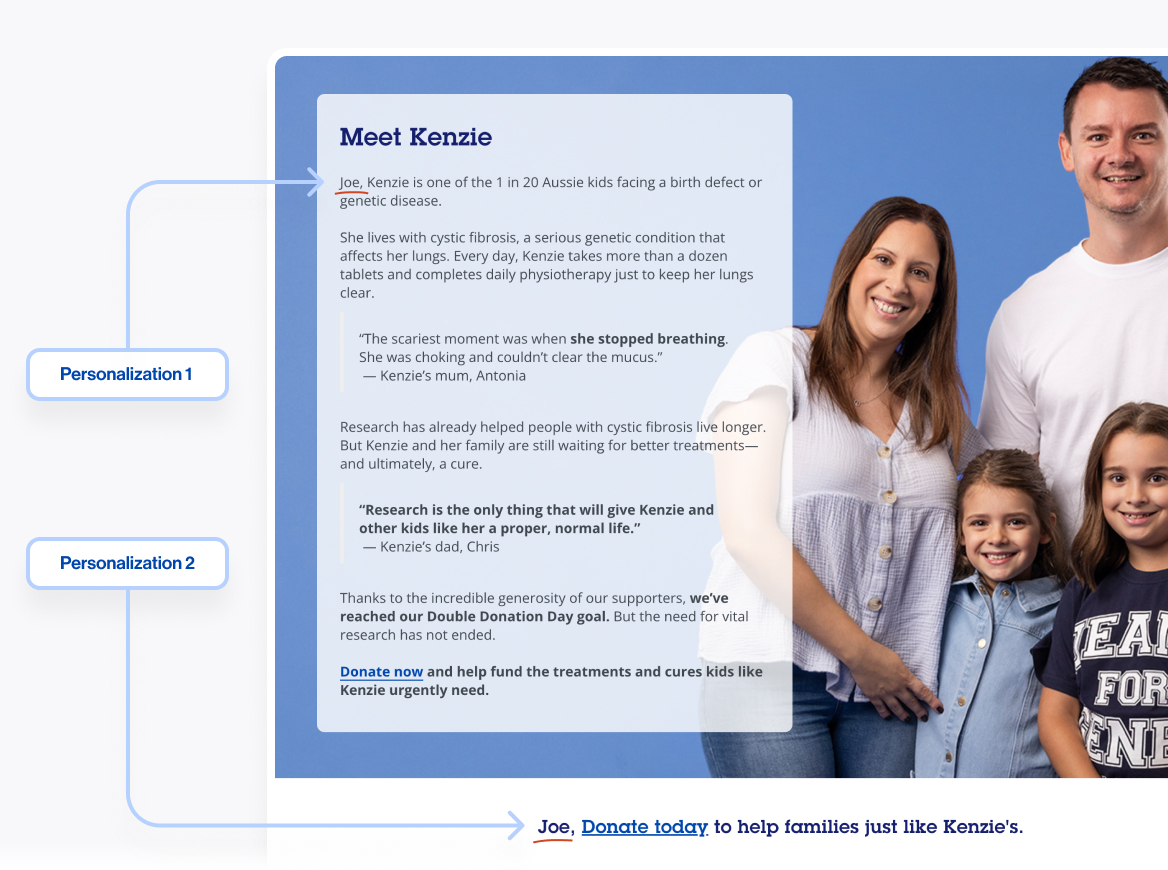
Double Donation Day runs on two pages. First-time donors land on the general Double Donation Day page. Anyone who's given before, be it a general donation or a gift in a previous matched-funding campaign, is routed to a page that already knows their first name, references the impact of their previous support, and adjusts suggested donation amounts to what they gave last time.
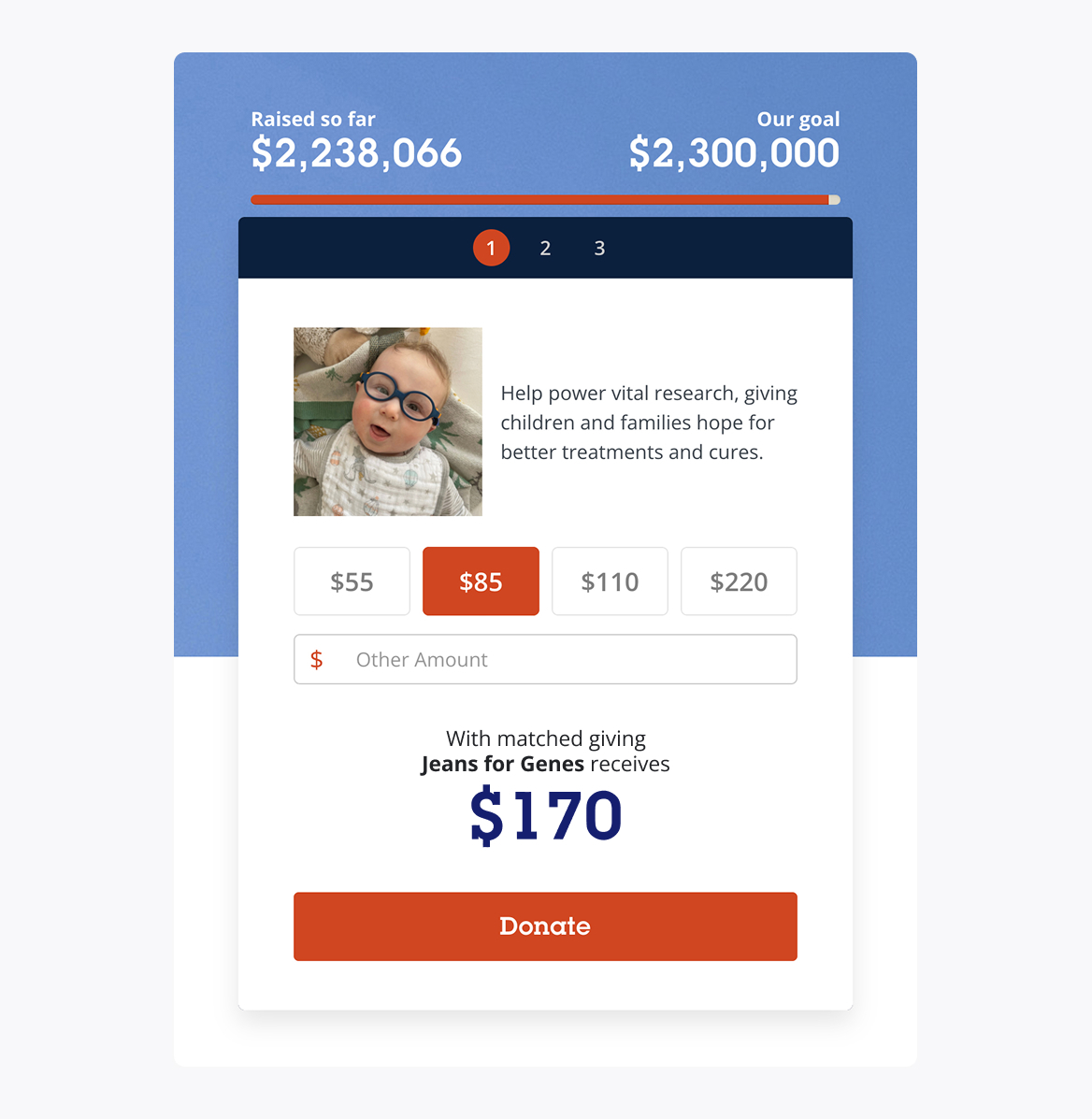
Despite being personalized, every gift folds back into one collective total progress bar, meaning every donor, new or returning, watches the same number rise.
Why the build-up before the match matters
In the days leading up to Double Donation Day, Jeans for Genes runs a deliberate warm-up. An announcement bar goes live on site from Monday, followed by emails and SMS building anticipation through Wednesday, across fundraisers and general supporters alike. By the time Double Donation Day opens at 8am Thursday, nobody is hearing about it for the first time, they're acting on something they already expected.
Double Donation Day doesn’t just happen on the day. It’s the result of weeks and months of strategy, building the audience and matched funding in parallel. By the time the day arrives, you need a clear understanding of the position you’re in so you can set a matched-funding target that’s ambitious, but achievable.
— Greg Noel-Butterworth, National Campaign Manager, Jeans for Genes
Raising the bar with a final $350k added to the matching pot, mid-way through
Every matched-giving day carries a risk: commit too much of the fund too early, and there's nothing left if momentum builds later on. Commit too little, and a slow start locks in a smaller result than the audience could have delivered.
By 2:30pm, with $1.6 million already on the board and no sign of the pace slowing, CMRI made the call to go bigger, adding another $350k to the match pot and setting a final target of $2.3 million.
We knew going into the day that we were in a strong position. But by around 2:30pm we’d already reached $1.6 million, and the speed at which it came in gave us the confidence to be bold, release another $350,000 in matched funding and push the overall target to $2.3 million.
— Greg Noel-Butterworth, National Campaign Manager, Jeans for Genes
Three custom features built to make momentum visible
Double Donation Day features three out-of-the-box elements with the signature Jeans for Genes magic sprinkled on top: a live progress bar, a scrolling ticker of recent gifts, and a running list of active fundraisers, all scoped specifically to matched-period donations across the Jeans for Genes campaign. None of them change how a donation is processed. What they change is what a donor sees in the moment before they decide to give.
Watching a number climb, a stream of other people's gifts scroll past, and a list of fundraisers already in motion means donors aren't just being asked to give. They're being shown, in real time, that plenty of people already have, and that their gift is about to join the same rising total.
That's part of why the day can move as fast as it does. By 2:30pm on day one, that visible momentum was already at $1.6 million and climbing. The custom progress bar carrying that momentum is one of the most important pieces of infrastructure in the entire campaign—and, by Greg's own account, it works like clockwork every year.
Meeting the children that a doubled gift is supporting
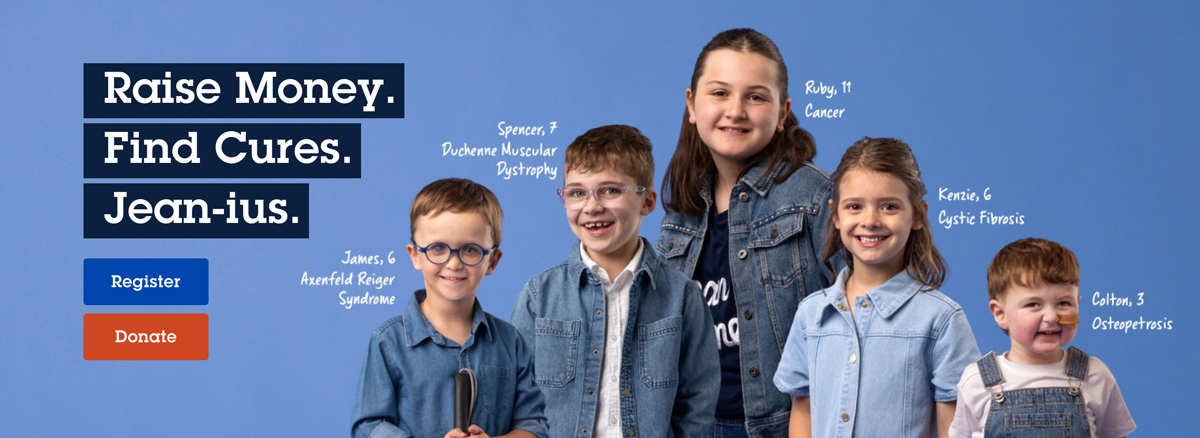
Funds raised through Double Donation Day help researchers at CMRI bring cures closer for the 1 in 20 kids who face a birth defect or genetic disease, through work spanning next-generation DNA sequencing to gene therapies CMRI’s own scientists describe as “the medicine of the future.”
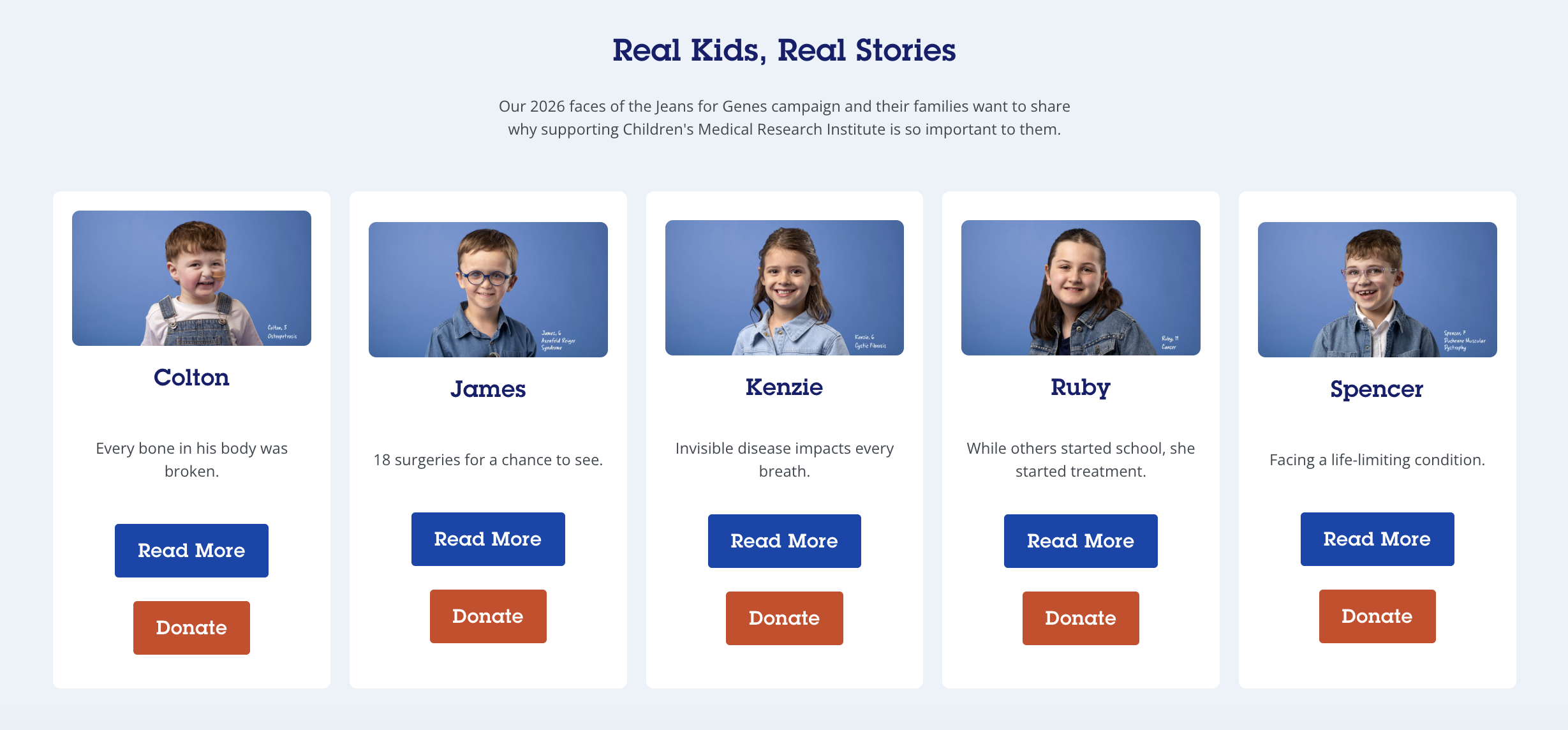
Jeans for Genes keeps that connection specific: across the campaign, five real children, each living with a different genetic condition, are connected with five of CMRI’s research labs and the scientists working in relevant areas of research.
An interactive lab tour was initially designed to let fundraisers unlock each child’s story and lab as they hit milestones, including registering, reaching ten donations and achieving VIP status. All five doors have since been opened, giving fundraisers the opportunity to explore the research their fundraising is helping bring closer. A donor doubling their gift isn’t just doubling a number on a page, they’re doubling their contribution to research that could change the future for children like those featured throughout the campaign.
The takeaway
The real highlight from this year's Double Donation Day isn't just the final number—it's the willingness to take the risk and raise the target mid-day. That only works when the comms have primed the audience, the pages convert whoever lands on them, and the features work together to build the momentum as the day goes on. Jeans for Genes nailed all three.
Want to dive deeper into personalizing the fundraising experience?
We unpacked the full Jeans for Genes campaign—how it works, what makes it tick, and how Children's Medical Research Institute built something that engages fundraisers one-on-one, not just en masse.